Essay: Kautilyan Side of Indian Diplomacy
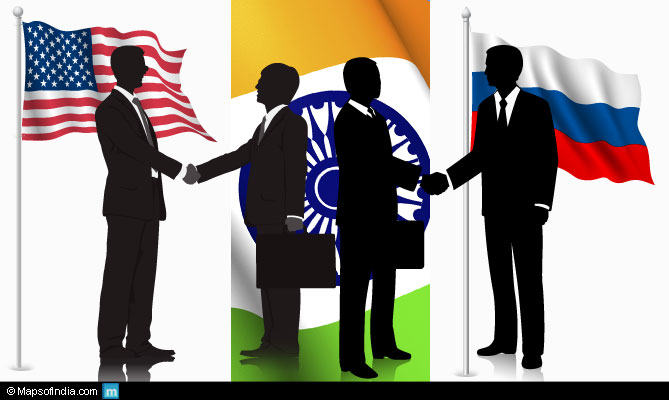
The media houses in the West often find India's foreign policy and diplomacy ambiguous and inconsistent (as sometimes it is not beneficial to them?). One of the reasons might be unfamiliarity towards India's rich heritage of history from which she derives her foreign policy doctrine. Arthashashtra, the first-ever recognised document dedicated to foreign policy, still guides India in difficult times when the world order is changing, new challenges have emerged, a new superpower has risen in the east and old equations have changed.
Arthashastra, authored by Chanakya (the son of Chanak) or Kautilya or Vishnugupta (all names refer to the same person), laid the foundation for India's foreign policy (Kootniti as described by Kautilya). The literature is not merely a theory, but its wisdom is tested on the battlefields of the Mauryan empire. It deals with the topics such as the state and its constituents, treasury, sources of revenue, accounts and audit, civil service regulations, law and justice, defence and war. Its teachings played a crucial role in architecting kingdoms till the 12th century AD, lately, it was rediscovered by R. Shamsatry in 1909. The disappearance of it in the medieval periods can be associated with the arrival of the Mughals in India.
India inherited its policy of mutual non-interference from Kautilya. As he says: "Sama Vyayamau Yogakeshemayoryonih" (The welfare of the state depends on adopting a policy of non-interference). In recent developments at the UN Human Rights Council when India abstained to vote against China's treatment of Uyghur Muslims, it surprised the parties unaware of the Sino-Indian Panchsheel Agreement of 1954, which speaks of mutual non-interference policy.
Kautilya defines the antagonist, the enemy, the friend, the ally, the friend of an ally, the friend of the enemy, the middle king, and the neutral king. Further, he describes the types of enemies, the circle of enemies, the types of kings, and the objective of power. According to him, all the kingdoms which share borders with the conquerer are antagonists. Moreover, he classifies the kings as weak, equal and powerful and describes how to maintain relations with each of them.
Putting India into the context, Pakistan would be the natural enemy (Shatru) as the country's every action is directed towards threatening peace in India. China would be the antagonist (Ari) or the enemy's ally(Ari-Mitra). Russia would be a friend(Mitra) or neutral king(Udhasina) and the same with the United States. Considering the complexities of the modern world brought together by Globalisation, the roles of countries may defer depending upon the situation. The US, for example, would be more of a friend for India in conflicts with China, while Russia would play a neutral role. On contrary, Russia played the role of a friend in conflicts with Pakistan, for example in 1971, by vetoing in favour of India, while the United States promoted Pakistan's military with weapons even though it contradicted the US's basic foreign policy of promoting democracy (Pakistan is militarily dictated nation).
India's current stance on the global stage regarding the Ukraine-Russia conflict is a part of the strategy described by the Kautilya. By denying picking a side, India plays the role of a neutral king. India did the same by leading a non-alignment movement under the strategic leadership of Jawaharlal Nehru and denied picking a side in a formerly bipolar world. After 75 years of Independence, India has grown militarily, economically and intellectually (as Kautilya considers the intellect of foreign diplomacy equal concerning military and economic power) and can choose its side of the welfare of its people in a new multipolar world.


Comments
Post a Comment